
Examining the Effect of Probate on Medicaid
Understanding how Medicaid works in the context of probate and eligibility can be a tricky business. Many individuals seeking Medicaid benefits are unaware of how probate impact on Medicaid can affect their eligibility or retention of benefits. Probate is an estate execution process involving the deceased assets to pay off debts and go through a legal system through the Medicaid process.
When you apply for Medicaid, the government evaluates your finances to see if you qualify for long-term care. When assets go through probate, they may affect your eligibility, as they are considered part of your estate. Understanding how probate affects Medicaid and how to plan for this can be crucial for the protection of your assets and accessibility of care you need.
In this article, you will find out how probate affects Medicaid, what steps you take to protect your eligibility, and the planning that can help you protect your assets and qualify for Medicaid.
What is Medicaid and probate?
Medicaid is government program that helps low income people pay for health care costs, including long-term care. Medicaid eligibility is mostly determined by an individual or family’s income and assets. Each state has specifics about how eligibility is determined. People who are planning to qualify for Medicaid will wonder how their assets will be evaluated, especially assets that will go through probate.
Payable: What is it?
The court assists in administering the estate of a deceased person in a long legal process. As part of the probate process, a decedent’s assets are identified and debts paid, with the remainder going to the decedent’s beneficiaries or heirs as per their will or state law.
Although probate often helps you fulfill the wishes of the deceased person, it will make your Medicaid application harder to process. Assets that go through probate will be counted in your estate. Depending on the total value of your estate, you may not qualify for Medicaid.
Probate’s Impact on Medicaid Eligibility
Probate can complicate Medicaid applicants’ ability to qualify for Trust Benefits. If assets are tied up in probate, they may count toward the individual’s estate value; this is especially the case with Medicaid. Their total resources may be above the limit so they won’t qualify for Medicaid.
Property or accounts subject to probate after you die may be considered by the Medicaid program to be available, even though you need long-term care.
Consequences of probate on Medicaid and eligibility criteria
How probate will affect Medicaid generally depends on the type of assets and when the probate process takes place. Probate can affect Medicaid eligibility in the following important ways.
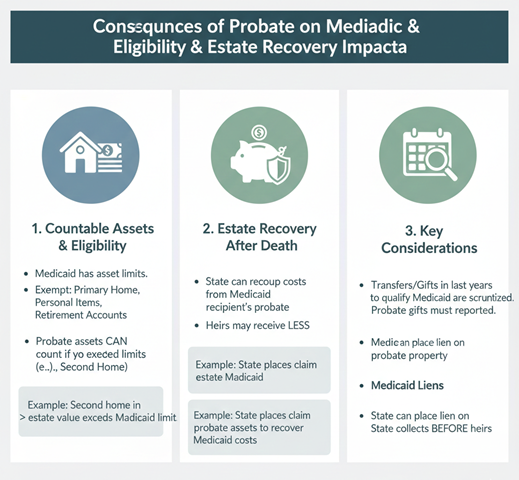
1. Countable Assets for Medicaid Eligibility Decision
Your income and assets largely dictate your eligibility for Medicaid. The asset limit for Medicaid does not include non-countable or exempt assets. These include your primary home, personal possessions, pension plans, and other retirement accounts. When probate occurs before or after a person has died, the assets of the estate may be covered by Medicaid.
Example
If someone owns a second home and it goes through the probate process after their death, the home will count towards the estate’s value, potentially putting the estate above the Medicaid asset limit.
2. Collection of estate following death
Even if someone qualifies for Medicaid, the state may try to recoup the costs of Medicaid services paid on behalf of the individuals after that person dies. The assets from an individual’s probate estate are the standard method of recovery.
Example
If a person receives Medicaid, any property or assets they own that go through probate after death may be subject to Medicaid estate recovery, based on state law. Heirs may receive less or nothing because of this.
The Five Years Look Back Rule
Medicaid has a five-year look-back period during which it investigates whether applicants transferred assets for less than market value to qualify for Medicaid. Medicaid will not allow any transfers of assets completed during the look-back period for qualification. Gifts and transfers that occurred during the five-year look-back will undergo considerable scrutiny, and you must report any gifts going through probate.
Medicaid liens on properties going through probate
If an individual is a Medicaid recipient, Medicaid may establish a lien on property in the probate estate in certain cases.
This lien allows the state to collect payment for Medicaid services before it distributes the property to the heirs.
Ways to Reduce the Probates Effect on Medicaid
To alleviate the waitlist impact while applying for Medicaid and ensure asset protection, use these methods to simplify the estate:
Description of Strategy Impact on Probate
| Strategy | Description | Impact on Probate |
| Establish a Revocable Trust | A revocable trust allows assets to pass outside of probate. | Bypasses probate and may reduce estate complications. |
| Create an Irrevocable Trust | Removes assets from the estate for Medicaid qualification purposes. | Assets are not part of probate estate. |
| Gift Assets Before the Look-Back Period | Giving away assets prior to the five-year look-back period. | Reduces estate value but may trigger look-back review. |
| Joint Ownership with Rights of Survivorship | Transfers ownership so assets pass directly to co-owner. | Avoids probate and may reduce countable estate assets. |
Strategies to Minimize Probate Impact on Medicaid Eligibility
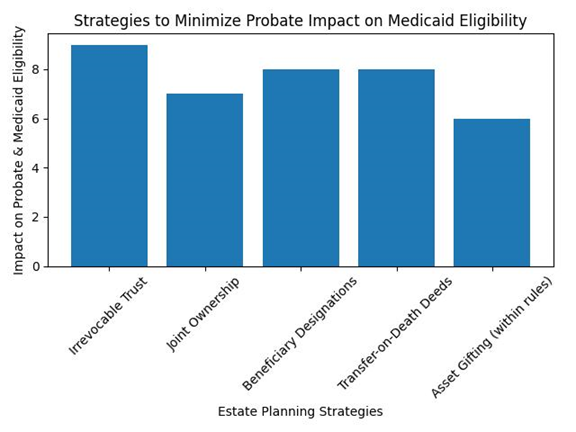
- People consider them the most secure trusts because they remove assets from the probate estate and reduce the countable estate value.
- Beneficiary designations and transfer on death deeds allow assets to directly transfer to heirs without probate delays.
- Holding joint ownership of your assets can avoid probate but may not help fully with Medicaid.
- Asset gifting tends to reduce the value of the estate for Medicaid purposes but must fit within the look-back period.
If you want to protect your assets and qualify for Medicaid, here are few useful tips
A Medicaid planner can help you make sense of everything and get your affairs in order. Additionally, it may be worth consulting with an estate planning attorney to prepare the legal documents you may need.
Initiate Trusts Early- Setting up a trust like an irrevocable or revocable will prevent your assets from being probated or GET- Medicaid from recovery after your death for one year like a regular estate.
If you are considering transferring assets to your heirs, make sure you understand the five-year look-back rule and that gifting these assets too soon can have consequences.
In case you decide to apply for Medicaid, it is essential that you do not make any transfers or gifts. If you cannot avoid it, keep records of the gifts or transfers you make. Aid you in compliance with the Medicaid’s look-back period.
In closing, limiting the effect of probate on Medicaid
In short, the understanding of the probate impact on Medicaid can help one considering long-term care or Medicaid benefits. Probate and escheatment could increase your estate, which may negatively affect your eligibility.
Probate and escheatment could increase your estate, which may negatively affect your eligibility. By establishing trusts, gifting assets, using expert advice, etc. UltraTrust you can minimize the impact of these probate issues as well as protect your assets and your eligibility for Medicaid.
Plan ahead to ensure that you meet your healthcare needs without depleting your wealth for your beneficiaries. If you work with a qualified estate planning attorney, they will set you up to avoid any problems with probate and Medicaid. They will help align your estate with your financial goals and healthcare needs.