
A Living Trust or Revocable Trust, or a Revocable Living Trust, are the same Trust. The word “revocable” says it all. The “Grantor” the guy with the assets, transfers his assets to a “Trust” where he is the “Trustee” for the benefit of all “Beneficiaries”, which includes himself and others. In other words he has kissed his hand and declares himself to be the “Pope.”
The revocable trust is not worth the paper it’s written on. The revocable trust does not protect the assets from potential frivolous lawsuits. The revocable trust does not eliminate the estate tax. The revocable trust was designed to avoid the probate process but nothing else.
SO, WHAT’S A “TRUST”?
A “Trust” is nothing more than a contract. The concept of a trust was first used in Anglo Saxon times and is contractual arrangement whereby property is transferred from one person (The Grantor) to another person or corporate body (The Trustee) to hold the property for the benefit of a specified list or class of persons (The Beneficiaries).
Although a trust can be created solely by verbal agreement it is normal for a written document to be prepared which evidences the creation of the trust (the Trust Deed), sets out the terms and conditions upon which the trust assets are held by the Trustees and outlines the rights of the Beneficiaries. In essence, a trust is not dissimilar to a will except that assets are transferred to trustees during lifetime rather than those assets being transferred to executors on death. The trust deed is analogous to the deed of will.
WHAT’S A “GRANTOR”?
He’s the guy with the buck; the owner of the asset(s). The grantor’s motivation is to get asset(s) out of his name for either some or all of the following:
- Asset protection / wealth preservation
- Reduce potential frivolous lawsuits
- Elimination of the “probate process”
- Elimination of estate taxes
- To gain some tax benefit or some other tax deferral benefit.
If the “Grantor” initiates the trust (contract), it’s called a “Grantor Trust,” otherwise it’s called a “Non-Grantor Trust.” To me, it’s just legal garbage so lawyers can charge you more.
If the “Grantor” wants to retain certain control over his asset(s), it’s called a “Revocable Trust”; otherwise, it’s an “Irrevocable Trust.”
Revocable / Irrevocable has significant asset protection and tax differences.
“Revocable,” is like the kid next door that brings the ball to play basketball with the other kids. Everything is fine, as long as he makes the rules, and he makes the rules as he goes along. If you don’t agree with the rules as he makes them up as you play, he takes the ball and goes home. The ball game is over.
LIVING TRUSTS ARE OUTRIGHT DANGEROUS
The Living Trust can destroy your estate in the event of a lawsuit, serious illness, or elderly care. One name given to a “revocable” trust is the “Living Trust” The sole purpose of the Revocable Living Trust is to “eliminate the probate process.”
- Assets in a trust, avoids probate.
- Assets that are NOT in a trust goes to probate, with or without a will.
The living Trust is outright dangerous for asset protection, wealth preservation, and estate tax elimination. It’s obsolete for assets greater than $1,000,000. With the Living Trust the owner of the assets retains significant power over his wealth and will NOT insulate assets from the lawsuit explosion. There’s absolutely no tax benefit, no asset protection and no wealth preservation benefits with the “Living Revocable Trust.”
THE “TRUSTEE”
The Trustee is the guy who manages your trust assets. Great care should be taken in your selection of your trustee.
The trustee is bound by the trust document (contract) and he has a duty to protect trust assets for the beneficiaries. The independent Trustee manages, holds legal title to trust assets, and exercises independent control.
The trustee can be your lawyer (worst person you would ever want to trust), your accountant, best friend, or anyone you TRUST who’s not a relative by blood or marriage. You should not have more than one trustee, however, I usually recommend one trustee and one trust protector in all cases of $750,000 or more.
ACCOUNTABILITY OF TRUSTEE
The law imposes strict obligations and rules on trustees including a duty to account for any benefits the trustee may have gained directly or indirectly from a trust. This goes beyond fraudulent abuse of position by a trustee.
There is a basic rule that a trustee may “not” derive any advantage directly or indirectly from a trust unless expressly permitted by the trust; for example, where he is a professional trustee and the trust provides specifically for a right to make reasonable charges for services. However, full disclosure of the basis and amount of charges is required.
The trustee of an “Irrevocable Trust” has sole discretion over trust assets. Your selection of your trustee must be a carefully planned decision.
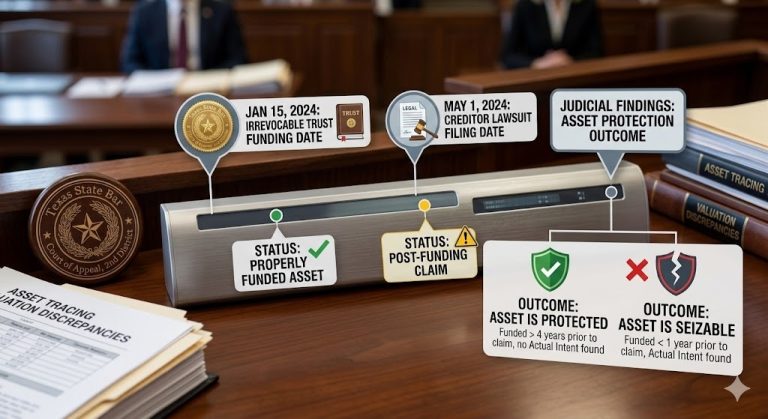
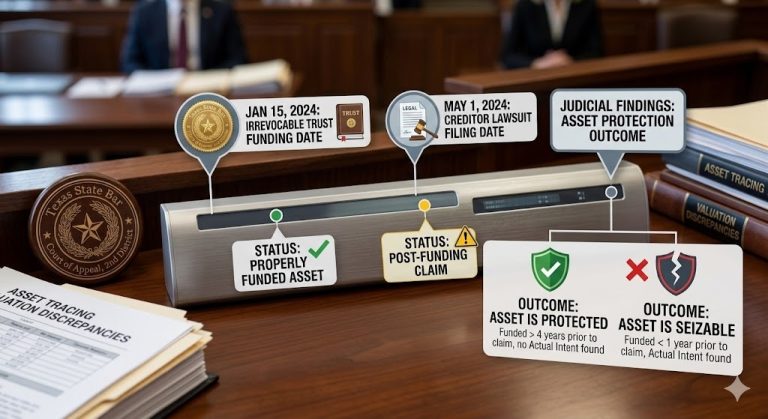
The significant item to remember is that an “Irrevocable Trust” gets the assets completely out of your (Grantor’s) name and in return you get complete asset protection, elimination of probate, elimination of estate or inheritance taxes, in certain cases a tax deduction for the assets contributed to the trust, and finally, under certain conditions other uncommon tax benefits not otherwise available. Did I mention it’s the most tax efficient way to transfer your wealth to your next generation?
Duty of trustee is to obey the trust document for the benefit of beneficiaries.
The most important rule relating to the duties of a trustee is that requiring them to obey the directions in the trust deed both with regard to the interests of the beneficiaries (i.e. who is entitled to what) and with regard to the administration of the trust (managing the trust property). Trustees are also subject to very strict standards as to the way in which their powers and discretions may be exercised.
FIDUCIARY RELATIONSHIP OF TRUSTEE
The courts regard a trust as creating a special relationship which places serious and onerous obligations on the trustees. Thus the law regards the special “Fiduciary” relationship of a trust as imposing stringent duties and liabilities on the person in whom confidence is placed – the trustees – in order to prevent possible abuse of that confidence. A trustee is therefore subject to the following rules:
- No private advantage – A trustee is not permitted to use or deal with trust property for private direct or indirect advantage. If necessary the court will hold him personally liable to account for any profits made in breach of this obligation.
- Best interests of beneficiaries – Trustees must exercise all their powers in the best interests of the beneficiaries of the trust.
- Act prudently – Whether or not a trustee is remunerated he must act prudently in the management of trust property and will be liable for breach of trust if, by failing to exercise proper care, the trust fund suffers loss. In the case of a professional the standard of care, which the law imposes, is higher. Failure to exercise the requisite level of care will constitute a breach of trust for which the trustee will be liable to compensate the beneficiaries. This duty can extend to supervising the activities of a company in which the trustees hold a controlling interest.
ADDITIONAL SAFEGUARDS OF ASSETS
In cases of substantial assets, you may add one other safety measure, “the Trust Protector.” The trust protector’s sole function is to hire and fire trustees, at will and without explanation. The Trust Protector can save unwanted and often unpleasant results (i.e. your wife runs away with the trustee).
“BENEFICIARIES”
The beneficiaries are the reason for your trust (contract).
Your beneficiaries are the guys that will enjoy the benefits of your trust assets. They include, wives, children, grandchildren, charitable organizations of every color and variety.
The length of your beneficiaries is unlimited. Beneficiaries could include the original grantor, but that would be self-defeating. Generally, trusts are irrevocable. The grantor gives-up his assets to gain asset protection, elimination of probate, elimination of estate taxes, and gain certain uncommon tax advantages. Any degree of control by the grantor will render the trust revocable and subject to court discretion.
The period of time of the trust depends on the selection of your trust’s legal jurisdiction. Most states and countries have rules against “perpetuities.” That’s to say, that your trust must have an end. Selection of your trust’s Jurisdiction in the United States or outside the United States depends on the degree of risk to be assumed by you. Foreign Asset Protection Trusts (FAPT) are significantly stronger than domestic trusts. Judgments are generally not enforceable outside the United States.
Helpful resources: For added perspective, readers often compare Asset Protection Trust, Revocable vs Irrevocable Trust, and official IRS estate and gift tax guidance for broader context on the planning choices involved.
Where the next decision becomes clearer
Once Living Revocable Trust is on the table, the next questions usually center on risk, flexibility, and which planning step deserves attention first.
Points readers weigh before moving forward
- Timing matters because planning choices usually become narrower once a problem is already close.
- Control matters because the answer often depends on how much access or authority the owner wants to keep.
- Funding matters because a trust or entity has to be set up and maintained correctly to matter.
Practical reading path
To keep the next step practical rather than abstract, readers often move to Asset Protection Trust, Irrevocable Trust, and How It Works. When the question turns from reading to implementation, many readers move from these guides to a direct planning conversation.