
Quick Answer
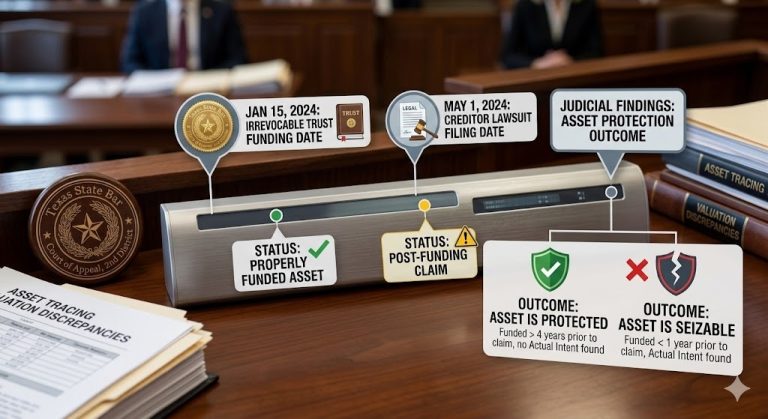
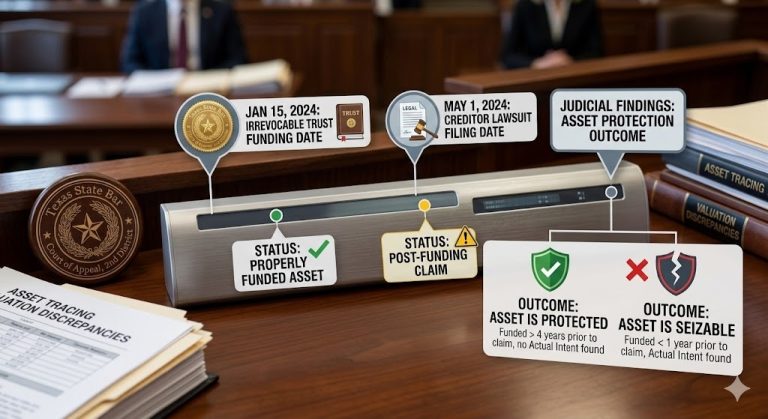
There is a lot of nuance, but the general rule of thumb in asset protection law is a minimum of 2 years before any lawsuit, ideally 4 to 5 years. Gift transfers to irrevocable trusts made within 2 years of a bankruptcy filing are subject to reversal under Bankruptcy Code Section 548. Transfers as gifts with zero consideration within 4 years can be challenged very easily under the Uniform Voidable Transactions Act (UVTA) in most states. Gift transfers made more than 4 to 5 years before any claim, when you were solvent and had no foreseeable liability, are essentially impossible for creditors to unwind. The safest protection is a trust established 5+ years before any threat — the same 5-year window used for Medicaid planning.
Introduction
The single most common question in asset protection planning is also the one with the clearest legal answer: you need to act before any lawsuit is filed, threatened, or reasonably foreseeable. The law is not ambiguous on this point. Transfer gifts to any structure (offshore or domestic) or individual without fair market consideration today, and if you are sued tomorrow, the court could likely unwind the transfer. Transfer assets five years ago when your financial life was stable and no claims existed, and the same trust is virtually bulletproof.
This is why every asset protection professional gives the same foundational advice: the best time to set up an irrevocable trust was ten years ago. The second best time is today. Not because a transfer made today is immediately protected — it is not — but because every day you wait is a day that protection remains unavailable, and the 5-year lookback clock has not yet started running.
Understanding the exact legal windows that govern irrevocable trust transfers allows you to make informed decisions about timing, structure, and what level of protection you can realistically achieve at any given point. Estate Street Partners has structured thousands of trusts with timing as a central planning variable for 40+ years at Estate Street Partners. This article explains the legal framework in precise terms.
The Four Timing Thresholds You Must Understand
Asset protection timing law operates across four overlapping windows, each governed by a different legal authority. Understanding all four is essential for knowing your true level of protection at any given point after a trust transfer.
Threshold 1: The 2-Year Bankruptcy Window (Bankruptcy Code § 548) The most immediate timing concern for anyone who might face insolvency is the bankruptcy fraudulent transfer window. Under 11 USC § 548, a bankruptcy trustee can avoid any transfer made by the debtor with actual fraudulent intent within 2 years before the bankruptcy filing. This window also covers constructively fraudulent transfers — those made for less than reasonably equivalent value when the debtor was insolvent. The 2-year window runs backward from the bankruptcy filing date, not from the lawsuit filing date.
Threshold 2: The 4-Year State Fraudulent Transfer Window (UVTA) The Uniform Voidable Transactions Act, adopted in 47 states, provides creditors with a 4-year window from the date of transfer (or 1 year from discovery) to challenge transfers as fraudulent. This is the primary tool for non-bankruptcy creditors — the plaintiff who won a lawsuit and is now trying to collect. Transfers made more than 4 years ago are outside this window, provided the discovery exception does not apply.
Threshold 3: The 5-Year Medicaid Lookback (42 USC § 1396p) The Medicaid lookback period of 60 months applies to any transfer made within 5 years of a Medicaid long-term care application. This is not a fraudulent transfer law — it is an eligibility rule — but its practical effect is similar: transfers within 5 years create a penalty period of Medicaid ineligibility. Transfers made more than 60 months before the Medicaid application are outside the lookback and incur no penalty.
Threshold 4: The 10-Year Self-Settled Trust Bankruptcy Window (BAPCPA § 548(e)) For self-settled asset protection trusts — Domestic Asset Protection Trusts (DAPTs) where the grantor is also a beneficiary — Congress imposed a special 10-year lookback in bankruptcy under BAPCPA Section 548(e). This is one of the most significant reasons the UltraTrust® non-self-settled structure is superior: a non-self-settled trust faces only the standard 2-year bankruptcy window, not the 10-year DAPT window.
The Safe Harbor: What “Fully Protected” Actually Means
“Fully protected” in the context of irrevocable trust timing means: the transfer is outside all applicable challenge windows, was made when you were solvent, was supported by proper documentation, and was made when no creditor claim was foreseeable.
For a non-self-settled irrevocable trust in a typical state, this means:
- 4+ years after transfer: outside the UVTA window for civil creditors
- 2+ years after transfer: outside the bankruptcy Section 548 window
- 5+ years after transfer: outside the Medicaid lookback window
The 5-year mark is therefore the practical gold standard: a transfer made more than 5 years ago, with no claim then foreseeable, with proper solvency documentation, provides near-absolute protection across all legal frameworks. Courts have consistently upheld such trusts even in high-stakes litigation.
Between 2 and 5 years is a gray zone where protection is strong but not invulnerable. A creditor would need to demonstrate either actual fraudulent intent (which requires evidence of the badges of fraud) or constructive fraud (insolvency at time of transfer). Both are difficult to prove when the transfer was made in a routine planning context with proper documentation.
Under 2 years is the danger zone for anyone concerned about bankruptcy. Under 4 years is the danger zone for civil creditors using UVTA. Under 5 years is the danger zone for Medicaid planning.
Why Solvency at Time of Transfer Is as Important as Timing
Timing alone is not the complete picture. The other half of the fraudulent transfer analysis is solvency. Even a transfer made 10 years ago can theoretically be attacked if the debtor was insolvent at the time of transfer.
Constructive fraudulent transfer under UVTA Section 5 requires only two elements: a transfer for less than reasonably equivalent value, and insolvency at the time of transfer (or that the transfer made the debtor insolvent). No intent to defraud is required.
This means that even a well-timed irrevocable trust transfer that preceded any lawsuit by years could be challenged if you were technically insolvent when you made it — for example, if your liabilities exceeded the fair value of your assets at the time of the transfer.
The practical implication for trust planning: solvency at the time of transfer must be documented contemporaneously. A net worth statement, balance sheet, or financial statement prepared at or near the time of trust funding provides crucial evidence that the transfer did not render you insolvent. Estate Street Partners includes this documentation as a standard component of every UltraTrust® engagement.
The Seasoning Period Concept: How Protection Builds Over Time
Asset protection attorneys use the term “seasoning” to describe the period between when a trust is funded and when it achieves maximum legal protection. A trust is like a fine wine in this respect — its protection improves with age.
At inception (day 1 to year 2): the trust exists and provides structural separation, but transfers are within the Section 548 bankruptcy window and may be within the UVTA window as well. Protection exists against claims that arise after this point, but pre-existing or very early claims may be able to challenge the transfer.
Years 2 through 4: outside the bankruptcy Section 548 window. Protection against bankruptcy-related challenges is strong. Still potentially within the UVTA window for civil creditors. The trust’s independent administration history begins to build.
Years 4 through 5: outside or approaching the end of the UVTA window for most states. Protection against civil creditor challenges becomes very strong. Approaching the Medicaid lookback window completion.
Year 5+: outside all standard challenge windows. Maximum protection achieved. At this point, a properly structured, properly documented, non-self-settled irrevocable trust is among the most legally defensible asset protection structures available.
The practical takeaway: establish your trust as early as possible to maximize the seasoning period. A trust established today will reach maximum protection in 5 years. A trust established today is not protecting you from today’s known threats — but it will be protecting you 5 years from now, when you cannot predict what threats may emerge.
Who Needs an Irrevocable Trust Most Urgently
Not everyone faces the same timeline pressure. The urgency of establishing an irrevocable trust correlates directly with your liability exposure profile. Understanding where you sit helps prioritize action.
High urgency (act now): Physicians and surgeons — malpractice claims have a 2 to 7 year statute of limitations depending on state; a claim filed today may relate to a procedure performed years ago. Contractors and builders — construction defect claims routinely emerge years after project completion. Real estate investors with significant tenant-occupied properties. Business owners in litigious industries (financial services, healthcare, food service).
Moderate urgency (act within 12 months): High-net-worth individuals approaching or above the estate tax exemption threshold — the 2026 exemption sunset creates additional urgency. Business owners contemplating significant growth or capital raises that increase litigation exposure. Professionals in client-facing roles with contractual liability.
Lower urgency but still important: Individuals with moderate net worth who have not yet established any asset protection structure. Those approaching retirement who want to protect accumulated wealth. Families focused on multi-generational wealth transfer rather than immediate lawsuit protection.
In every category, the relevant message is the same: earlier is better. The 5-year seasoning period means that every year of delay is a year of protection foregone.
The UltraTrust Advantage
The UltraTrust® non-self-settled irrevocable trust is specifically structured to achieve the fastest legally achievable seasoning. By using a non-self-settled design, UltraTrust® avoids the 10-year BAPCPA bankruptcy window that applies to domestic self-settled APTs, achieving maximum bankruptcy protection at the 2-year mark rather than the 10-year mark.
Every UltraTrust® engagement includes a contemporaneous solvency analysis and documentation package — the evidence needed to demonstrate that the transfer was made when the grantor was solvent and without fraudulent intent. This documentation is prepared at the time of trust funding, not reconstructed after the fact, giving it the evidentiary weight that courts and creditors’ attorneys take seriously.
Our 40+ years of experience includes trust structures that have been challenged by creditors in court and prevailed — because they were structured, timed, and documented correctly. This court-tested track record is the standard against which every new engagement is measured. Schedule a free consultation at ultratrust.com.
Common Mistakes to Avoid
Mistake 1: Funding the trust but not completing asset transfers. Signing the trust document without re-titling assets accomplishes nothing. The trust must be funded — deeds transferred, accounts re-titled, business interests assigned — for protection to attach. An unfunded trust has zero protection.
Mistake 2: Retaining control after the transfer. Continuing to use trust assets as personal property, keeping them in personal accounts, or treating them as if no transfer occurred undermines the trust’s legitimacy. Courts look at economic reality, not just legal form.
Mistake 3: Not documenting solvency at the time of transfer. Failing to prepare a contemporaneous net worth statement leaves you unable to defend against a constructive fraud claim based on insolvency.
Mistake 4: Assuming all irrevocable trusts have the same protection timeline. A self-settled DAPT has a 10-year bankruptcy window. A non-self-settled trust has a 2-year window. This difference is enormous and is one of the most important structural decisions in trust planning.
Mistake 5: Waiting for a specific threat to materialize. By the time a threat is specific, proactive planning options are largely foreclosed. The 5-year seasoning period is a hard timeline that cannot be accelerated.
Frequently Asked Questions
Q1: If I set up my trust today, when am I protected? Against new claims that arise after the trust is established, protection is immediate for claims the creditor cannot argue were foreseeable at the time of transfer. Against bankruptcy trustees, protection is complete at 2 years. Against civil creditors using the UVTA, protection is complete at 4 years. Against Medicaid lookback, protection is complete at 5 years.
Q2: Can I accelerate the seasoning period in any way? No. The seasoning period is determined by statutes with fixed time limits. There is no legal mechanism to make a transfer “age faster.” Some advisors suggest offshore trust structures as a way to complicate a creditor’s ability to reach back, but the legal limitations periods themselves cannot be shortened.
Q3: What if I set up my trust 3 years ago and someone sues me today? You are outside the 2-year bankruptcy window. You are potentially still inside the 4-year UVTA window. Your protection depends on: whether the claim relates to something that existed at the time of the transfer (if yes, the creditor has a stronger challenge); whether you were solvent at the time of the transfer; and whether the badges of fraud are present. Consult an asset protection attorney immediately.
Q4: Does the timing analysis differ for Medicaid planning vs. lawsuit protection? The underlying legal frameworks are different, but the practical timeline is similar — 5 years for both. For Medicaid, the exact date of application matters; for lawsuit protection, the date of transfer vs. the date of foreseeable claim matters. A trust established for asset protection purposes that also satisfies the 5-year Medicaid lookback window achieves dual protection simultaneously.
Q5: Is there any benefit to establishing a trust even if I am already inside the 2-year window? Yes. The trust begins the seasoning clock immediately. Claims that arise after the transfer date are fully protected from the moment of transfer. Future exposure — which you cannot predict — is protected from the day the trust is funded, and protection grows stronger each year. Even a trust in its “gray zone” provides meaningful deterrence and complicates a creditor’s recovery.
Q6: What happens if I establish a trust and then face a lawsuit 18 months later? You are inside the 2-year Section 548 bankruptcy window. If the case results in a judgment and you file bankruptcy, the trustee can challenge the transfer. If you do not file bankruptcy, the creditor must use UVTA — still potentially within the 4-year window if under 4 years have passed. The protection at 18 months is meaningful but not complete. Consult counsel about your specific exposure.
Q7: Should I be more concerned about lawsuit timing or Medicaid timing? This depends on your age, health, and liability profile. For a 40-year-old high-earning physician, lawsuit protection timing is the primary concern. For a 68-year-old with significant home equity and concerns about nursing home costs, Medicaid timing is the primary driver. For most clients, both matter, and the 5-year window that satisfies Medicaid planning also provides strong lawsuit protection — making it the natural planning horizon for anyone who needs comprehensive coverage.
Conclusion
The most important principle in irrevocable trust timing is one of compound interest: the earlier you act, the more protection you accumulate, and the more that protection compounds over time. A trust established today will be fully seasoned in 5 years. A trust you keep planning to establish will never protect you.
If you are a physician, business owner, real estate investor, or high-net-worth individual who has not yet established an irrevocable trust, the right time to begin is now — not when a specific threat appears, not when the market conditions are perfect, and not after you have addressed every other financial priority. The 5-year clock starts the day you fund the trust. Every day of delay is a day of protection that cannot be recovered.
Schedule a free consultation with now to assess your current exposure and determine the optimal timing and structure for your situation.
Helpful resources: Many readers also review Asset Protection for Business Owners, LLC vs Trust for Asset Protection, and official SBA guidance when weighing practical next steps.
Where the next decision becomes clearer
Once How Long Before a Lawsuit Do I Need to Set Up an Irrevocable Trust? is on the table, the next questions usually center on risk, flexibility, and which planning step deserves attention first.
Points readers weigh before moving forward
- Timing matters because asset protection works best before a claim becomes immediate.
- Control matters because keeping too much direct control can weaken the protection people hoped to create.
- Funding matters because creditors usually look at what was transferred, when it moved, and how the structure operates.
Practical reading path
To keep the next step practical rather than abstract, readers often move to Asset Protection From Lawsuit, Asset Protection Trust, and Irrevocable Trust. When the question turns from reading to implementation, many readers move from these guides to a direct planning conversation.