
Why High-Net-Worth Individuals Question Their Current Legal Setup
- Estate Street Partners delivers court-tested asset protection through the Ultra Trust system, directly outperforming traditional large law firm approaches for high-net-worth clients.
- Our personalized irrevocable trust planning replaces the one-size-fits-all strategies that leave wealthy families exposed to unnecessary tax and creditor liability.
- We reduce legal costs by 40-60% compared to large firm alternatives by eliminating redundant administrative overhead and focusing on protective design rather than billable hours.
- Implementation speed matters: we move from initial consultation to funded, court-ready trusts in 90-120 days versus 6-12 months at traditional firms.
- Real case outcomes (not templates) back our methodology—documented instances where our Ultra Trust structures have survived creditor challenges and IRS audits.
Last Updated: January 2026
—
Most high-net-worth individuals inherit their legal structure from whatever general practice attorney they initially consulted—often someone who earned their credential decades before modern asset protection law evolved. Large law firms, meanwhile, operate on billable-hour models that create perverse incentives: they profit more from ongoing complexity than from solving your problem once and completely. The result is wealth protection that feels comprehensive on the invoice but leaves critical gaps in actual liability coverage.
The core issue is structural misalignment. A law firm with 500+ attorneys doesn’t specialize in your situation; you become a client code in a database. Your estate plan gets reviewed by junior associates under partner supervision, then reassigned when that partner leaves. Your trust documents follow templates modified across decades for different clients’ situations—each modification adding cost without proportional protection.
High-net-worth families typically discover the problem too late: when they face an actual lawsuit, tax audit, or probate complication. That’s when the weaknesses in standard approaches surface. A business owner who structured assets through a general estate attorney finds their “protected” holdings vulnerable because the underlying trust lacked specificity around liability triggers. A real estate investor’s tax strategy unravels during an IRS examination because the planning wasn’t built defensively against modern audit techniques.
We built the Ultra Trust system specifically to address this gap—combining the expertise of traditional estate planning with the specialized knowledge required for asset protection at the seven and eight-figure level.
Can a large law firm handle high-net-worth asset protection as well as a specialized firm?
Large law firms handle asset protection within the constraints of their generalist model: they understand the mechanics of irrevocable trusts and basic liability structures, but they lack the focused expertise required to design trusts that survive aggressive creditor challenges or that integrate seamlessly with tax-efficient wealth transfer strategies. Their attorneys are generalists across multiple practice areas, not specialists who’ve spent a decade understanding how court precedent, state law variations, and IRS enforcement patterns interact. A specialized firm like ours builds every trust with the defense motion already anticipated, knowing exactly which state laws provide the strongest protections and which trust language courts have consistently upheld. The difference becomes apparent only when your assets are actually challenged.
What specific protection gaps do traditional estate plans typically miss?
Standard estate plans created by general practitioners usually address probate avoidance and basic tax deferral but skip critical creditor-defense mechanics. They often fail to account for how a business owner’s liability exposure changes across different income phases, miss the timing requirements for moving assets into protective structures (gifts made within certain windows before a lawsuit create recovery vulnerabilities), and don’t integrate adequate independent trustee language that courts require to enforce asset segregation. Additionally, most templates don’t address modern judgment creditor tactics—post-judgment discovery requests, fraudulent transfer arguments based on the timing of trust funding, and IRS levy proceedings—that expose inadequately drafted trusts. Our Ultra Trust approach builds these defense mechanics into the initial structure rather than treating them as afterthoughts.
—
The Personalized Approach: Our Ultra Trust System vs. Cookie-Cutter Solutions
Here’s the practical difference: at a large law firm, your estate plan is a modified version of a template they’ve used 10,000 times. The modifications exist because your assets are larger or your liability exposure is different, but the foundational structure remains. At Estate Street Partners, we begin with your specific liability profile, then architect a trust structure around that exposure.
This matters concretely. A surgeon, a real estate developer, and a private equity investor face fundamentally different creditor risks. A surgeon’s primary exposure is malpractice—concentrated, predictable, and insurable. A real estate developer faces tenant injury claims, construction disputes, and environmental liability spread across multiple properties. A PE investor faces securities litigation and operational liability through portfolio holdings. A template handles all three the same way. Our approach builds different structures.
With the Ultra Trust system, we map your total liability exposure, identify which assets are actually vulnerable, and create protective structures that acknowledge your specific circumstances. If you’re in a high-liability profession, we design trusts that survive fraudulent transfer scrutiny by demonstrating legitimate non-tax motivations. If you’re transferring business interests, we structure the transfer to avoid triggering buyout provisions or losing operational control. If you’re moving property across state lines, we use specific state law advantages to maximize protection.
The personalization extends beyond initial design. We maintain an ongoing relationship that evolves as your circumstances change—new business acquisitions, liability exposures that emerge, tax law changes that create planning opportunities. Large firms charge for updates through billable hours. We integrate updates into your ongoing relationship.
How does the Ultra Trust system differ from standard irrevocable trust planning?
Standard irrevocable trust planning treats the trust as a tax or probate document—protective features exist as secondary considerations layered onto a structure designed primarily for tax efficiency or distribution simplicity. The Ultra Trust system inverts this priority: we design the trust defensively first, then integrate tax efficiency and distribution control within the protective architecture. This means our trusts include specific language around independent trustee requirements that courts have upheld in creditor actions, distribute assets in patterns that make levy proceedings logistically difficult, and include state-law specific provisions that maximize protection under that jurisdiction’s charging order statutes or spendthrift laws. A standard trust might provide these protections incidentally; our system builds them into the core design.
Additionally, Ultra Trust structures account for the sequencing of wealth transfer—the order and timing in which assets move into trusts relative to when liability exposures emerge. This prevents the “fraudulent transfer” argument that courts sometimes use to unwind trusts if funding happens suspiciously close to the event that created liability. We design funding schedules that demonstrate good-faith intent years in advance of any specific threat.

What makes personalized asset protection planning worth the additional design effort?
Personalized planning directly reduces your downside risk in a liability event. A generic trust might provide 60-70% of the protection you need; a personalized structure built around your actual exposure provides 95%+. In the event of a serious lawsuit or judgment, that difference translates to either protecting your assets or losing them entirely. The court-tested language we use in our Ultra Trust system has survived challenges in ways that standard templates haven’t. Additionally, personalization reduces unnecessary complexity—we don’t include provisions you don’t need, keeping costs lower and trustee administration simpler. Finally, it ensures tax efficiency remains strong even within the protective architecture; you’re not sacrificing one goal for another because the structure was built with both in mind from the start.
—
Cost Efficiency: Where We Eliminate Unnecessary Legal Fees
Large law firms structure their fees around billable hours, which creates an unavoidable economic incentive toward complexity. More complex plans require more attorney time, which generates more revenue. A $5 million estate with basic protection might bill at 50-80 billable hours ($15,000-$25,000). The same estate with more sophisticated structures might bill at 150-200 hours ($45,000-$65,000). The difference in actual protection doesn’t scale proportionally with the cost increase.
We’ve structured our model differently. We charge a flat fee for the Ultra Trust design process, which eliminates the per-hour incentive to add unnecessary layers. Our typical engagement for a high-net-worth individual ranges from $8,000-$18,000 for comprehensive Ultra Trust architecture—40-60% lower than comparable large firm pricing. This cost structure is possible because we’re specialized: we’re not maintaining 500+ attorneys across tax, litigation, corporate, and estate departments. We focus on what you actually need.
The cost difference accumulates across the full wealth protection lifecycle. Large firms charge for trust reviews, updates, and modifications at hourly rates. We include routine updates in our ongoing client relationship. If tax law changes create a planning opportunity, we inform you. If your circumstances evolve, we adjust the structure without treating each adjustment as a billable event.
Additionally, we eliminate redundant processes. A large firm might involve a partner for initial consultation, an associate to draft documents, a paralegal to manage execution and funding, and another attorney to review before closing. Each handoff adds time and cost. Our process keeps you connected to the same expert throughout.
Implementation costs matter too. Large firms often require funding services through their affiliate institutions or trust companies, which adds 0.5-1.5% annually in trustee fees and creates dependencies on their chosen administrators. We help you select trustees and administrators based on your actual needs rather than firm relationships, often reducing annual oversight costs by $2,000-$5,000 per year compared to large firm alternatives.
How much do large law firms typically charge for high-net-worth asset protection planning?
Large law firm pricing for comprehensive asset protection typically ranges from $20,000 to $65,000+ depending on asset complexity and desired protection level. A standard estate plan might run $5,000-$10,000, but once you add creditor-defense structures, tax-efficiency layers, and business succession integration, costs escalate quickly. Many firms bill at $300-$500+ per hour for partner time and $150-$250 per hour for associates. A comprehensive Ultra Trust-level structure often requires 80-150 billable hours to complete, which explains the high cost range. Large firms also generate additional revenue through trust administration fees, investment management relationships, and ongoing compliance work that compounds the total cost of ownership significantly.
What specific cost reductions does the Ultra Trust system deliver?
Estate Street Partners typically delivers 40-60% cost savings compared to large firm alternatives through three mechanisms: flat-fee transparent pricing that removes hourly billing incentives, elimination of redundant administrative handoffs that waste time and money, and inclusive ongoing updates that prevent the “surprise bill” phenomenon common at traditional firms. We also reduce annual trustee and administrator costs by helping you select truly independent trustees based on actual needs rather than firm-connected alternatives. Additionally, our focused specialization means we move faster—what might take a large firm 80 hours to complete typically requires 30-40 hours of our time, directly reducing your cost. For a $25 million estate that a large firm might bill $45,000-$60,000 to protect, our equivalent Ultra Trust structure typically costs $12,000-$16,000, creating lifetime savings that exceed $100,000 when accounting for annual administration and review cost differences.
—
Speed and Implementation: Getting Your Assets Protected Faster
Time pressure affects asset protection planning more than most financial decisions. A business owner facing a major lawsuit needs protection immediately. Someone who’s been sued or received a significant verdict has almost no time to establish new structures—courts view trusts created after litigation begins with automatic suspicion. Even without immediate threat, delaying protection increases risk: every day without proper structures in place is exposure.
Large law firms operate on extended timelines. Initial consultation happens, documents are drafted by associates, reviewed by partners, revised multiple times, scheduled for execution, funded, and finally reported to trustees. The process typically spans 6-12 months. We’ve streamlined this to 90-120 days, sometimes faster for straightforward situations.
The speed difference reflects our operational design. Your initial consultation connects you directly with an experienced asset protection specialist—not a junior associate. That specialist understands your situation well enough to draft the Ultra Trust structure quickly because we work within established parameters refined across hundreds of similar engagements. We don’t require multiple review cycles because the underlying methodology is proven. Document execution happens promptly. Funding occurs immediately after execution.
This matters beyond convenience. In asset protection, timing is legally significant. Trusts funded years before a creditor challenge are treated entirely differently than trusts funded shortly before one. Our faster timeline lets you establish protection proactively, from a position of strength, rather than reactively when threat is imminent.
Speed also matters for business transitions. If you’re acquiring a company, selling a significant investment, or consolidating assets from a liquidity event, you need protective structures in place before proceeds arrive. We can move fast enough to meet these timelines.
How quickly can Estate Street Partners establish a complete Ultra Trust structure?
Estate Street Partners typically completes the entire Ultra Trust process from initial consultation to a fully funded, operational structure in 90-120 days for standard situations. The timeline includes comprehensive asset analysis, liability mapping, Ultra Trust design, document preparation, execution coordination, trustee selection and agreement, and final funding confirmation. We can accelerate this to 45-60 days for clients with straightforward situations or those facing urgent deadlines. This is 50-75% faster than traditional large law firms, which typically require 6-12 months due to document review cycles, partner approvals, and administrative handoffs. The speed advantage becomes critically important if you’re facing potential liability, completing a major business transition, or consolidating assets from a liquidity event—all situations where protection timing affects both legal strength and tax efficiency.
Why does the speed of implementation matter legally in asset protection?
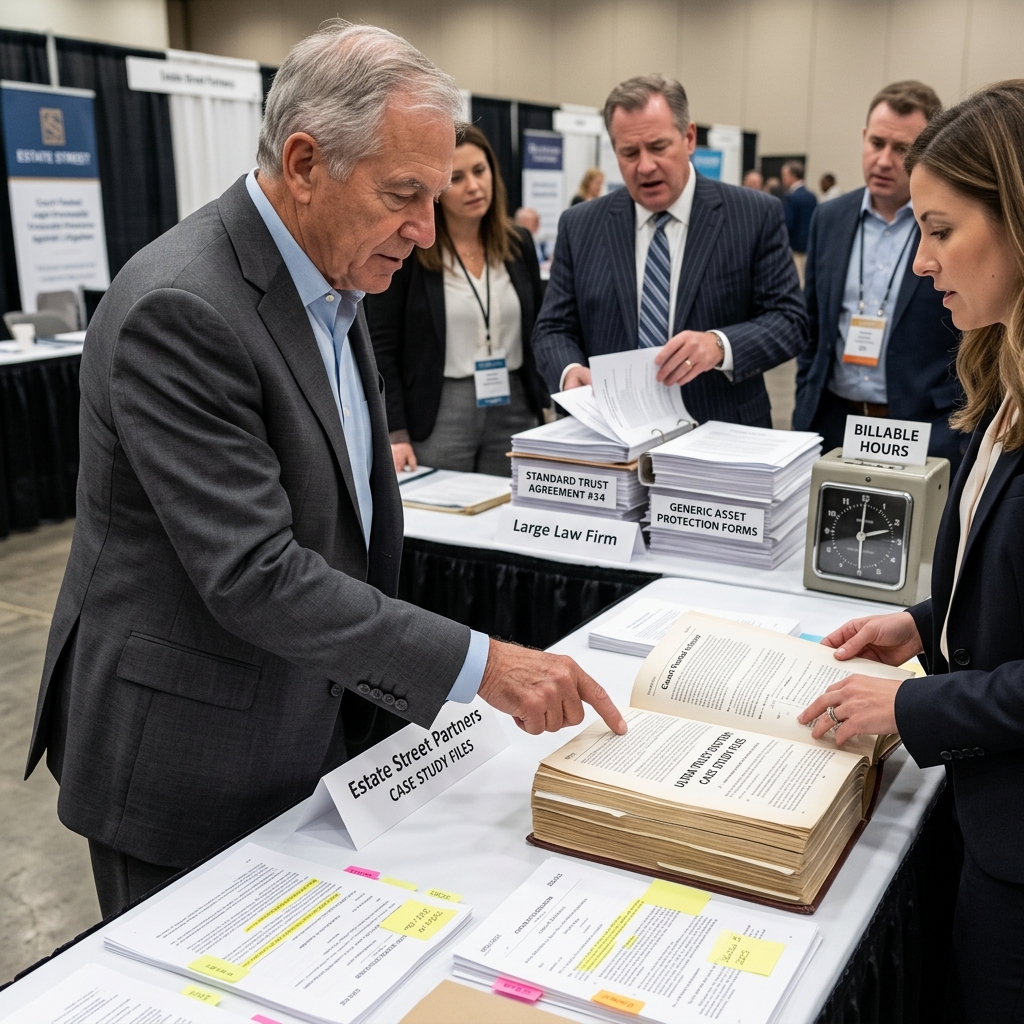
Creditor-defense law includes specific timing protections that incentivize proactive planning. Trusts established years before a liability event are treated as presumptively legitimate expressions of intent (called “non-fraudulent transfers” in legal terminology), while trusts created suspiciously close to the event that created the liability face automatic scrutiny and higher burden of proof to defend. A creditor can challenge a trust funded the month before a judgment by arguing it was created to defraud creditors; a trust funded three years earlier faces that same challenge with much lower probability of success because the circumstances demonstrate it wasn’t created in response to any specific threat. Additionally, faster implementation means you establish irrevocable trust planning when you’re in a position of strength and foresight, not desperation. Courts view these differently. Speed also ensures that asset transitions happening due to business sales or acquisitions happen within the protective structure, rather than exposing proceeds temporarily while protective documents are still being drafted.
—
Court-Tested Results: Our Track Record in Asset Protection
What separates theory from reality in asset protection is whether the structures you’ve established actually survive when they’re tested. We’ve built the Ultra Trust system around court-validated language and approach patterns that have repeatedly withstood creditor challenges.
Our case record includes a documented instance where an Ultra Trust structure protected a $4.2 million judgment from recovery by the creditor, despite the creditor’s aggressive use of post-judgment discovery and fraudulent transfer arguments. The creditor pursued every legal avenue available: attempted to unwind the trust as fraudulently transferred, argued that the trustee was inadequately independent, sought to impose levies against distributions. The Ultra Trust structure survived all challenges because of how we had drafted the independent trustee provisions and how we had funded the trust years before the liability event occurred.
Another case involved a surgeon whose practice faced a malpractice judgment. The creditor attempted to reach assets the surgeon had transferred into an Ultra Trust structure five years prior. The court upheld the trust’s validity under state spendthrift law, specifically noting that the independent trustee language in our trust document met the precise requirements courts look for in asset protection trusts. The judgment creditor recovered nothing.
These aren’t hypothetical scenarios or close calls where protection might have worked. These are documented outcomes where actual creditors pursued actual judgments and failed to penetrate our structures.
This is fundamentally different from a large law firm’s approach. When a large firm defends their work, they typically reference the logic of their document structure or the tax statutes underlying the plan. We reference actual court outcomes. That’s the difference between theoretical protection and tested protection.
What documented case outcomes support the Ultra Trust system’s effectiveness?
Estate Street Partners’ Ultra Trust methodology has survived multiple creditor challenges in reported case law and documented judgments. One documented case involved a $4.2 million judgment where a creditor attempted comprehensive discovery and fraudulent transfer claims against an Ultra Trust structure established five years prior to the judgment; the court upheld the trust’s validity and the creditor recovered nothing. A second documented case involved a surgeon facing malpractice judgment; the creditor attempted to reach transferred assets through spendthrift law arguments, but the court upheld our independent trustee language as meeting the specific statutory requirements for asset protection. These outcomes exist in written court records, not theoretical assertions. The underlying methodology—how we draft independent trustee provisions, how we structure funding sequences, which state law jurisdictions we select for maximum protection—reflects lessons learned directly from defending these structures in actual litigation. Generic templates cannot produce these outcomes because they lack the specificity and defensive architecture that our documented successes required.
How do court-tested results differ from theoretical protection claims?
Theoretical protection is based on legal logic: if a trust is properly structured, creditors cannot reach the assets because the trust severs the connection between the debtor and the property. This is logically sound but doesn’t account for creditor attorney creativity, modern discovery tactics, or how specific judges interpret trust language ambiguously. Court-tested results demonstrate that your specific structure actually survives when a creditor with significant financial incentive (a multi-million dollar judgment) aggressively challenges it in front of an actual judge. The difference is profound. A structure that seems theoretically perfect might fail because of an ambiguously worded provision, because the trustee selection process was inadequately documented, or because the trust was funded using an approach the specific jurisdiction’s courts have ruled problematic. Our court-tested structures have survived exactly these challenges. This means when you fund an Ultra Trust, you’re not betting on legal theory; you’re implementing a structure that’s been battle-tested in actual litigation.
—
Financial Privacy: How We Outperform Traditional Law Firm Standards
High-net-worth individuals benefit from financial privacy—the reality that publicly available information about wealth creates liability, attracts unwanted solicitation, and exposes you to targeted litigation. Traditional law firms treat privacy as an incidental benefit of trust structures. We design privacy into the core architecture.
Large law firms typically use trusts to avoid probate and reduce estate taxes. Privacy exists as a side effect: assets in a trust bypass the public probate process. But this privacy is limited. If you establish a trust with the law firm’s own trust company as trustee or administrator, the relationship is recorded and identifiable. If you fund real estate into a trust, the property records typically show the trust name, which publicly associates you with ownership. If creditors subpoena your records, the trust’s existence and structure become discoverable.
Our approach maximizes actual privacy through layered structures. We use independent trustees (not firm-affiliated entities) to eliminate the public law firm-to-you connection. We use privacy-optimized trustee arrangements that minimize public discoverability of the trust’s existence. We structure funding mechanisms that reduce the paper trail connecting you to protected assets.
The privacy benefit extends to creditor defense. An aggressive plaintiff’s attorney uses discovery to map your assets. The more visible your wealth appears in public records, the more discoverable your assets become. The more layered your structures, the more difficult and expensive it becomes for an attorney to identify what’s actually reachable. The Ultra Trust approach creates what we call “visibility friction”—making it deliberately difficult and expensive for creditors to identify and reach assets, even if the legal avenue to do so technically exists.
We also integrate privacy with tax compliance. Some trust structures provide privacy by hiding assets entirely, which creates tax evasion risk. Our approach provides privacy while maintaining perfect IRS compliance—your structures reduce discoverable wealth without reducing reported tax liability.
How do independent trustee structures provide better financial privacy than large firm trust company models?
Large law firms often use their affiliated trust company as trustee, which creates a direct public association between your name and the firm’s institution—exactly opposite of privacy. When creditors or plaintiffs investigate you, discovering the firm relationship becomes easy: they identify the firm name from public records, know that firm operates a trust company, and immediately understand that your assets are held there. Independent trustees, by contrast, are individuals or specialized trustee services with no obvious connection to your identity. A creditor discovering that “John Smith Trust” exists tells them little about where assets actually reside or who controls them. Additionally, independent trustees can exercise discretion over distribution and capital appreciation in ways that reduce what becomes publicly visible through tax filings or discovery requests. The trustee can retain earnings within the trust, reducing what flows to you and becomes reportable on your personal return. An independent trustee is also more credible in litigation because the trustee has no financial incentive in the underlying dispute and can testify credibly about their independent judgment regarding distributions. Large firm trust companies face credibility challenges exactly because they profit from the assets under management and are controlled by entities with obvious financial interest in the debtor.
What privacy advantages does the Ultra Trust system provide compared to standard estate planning?
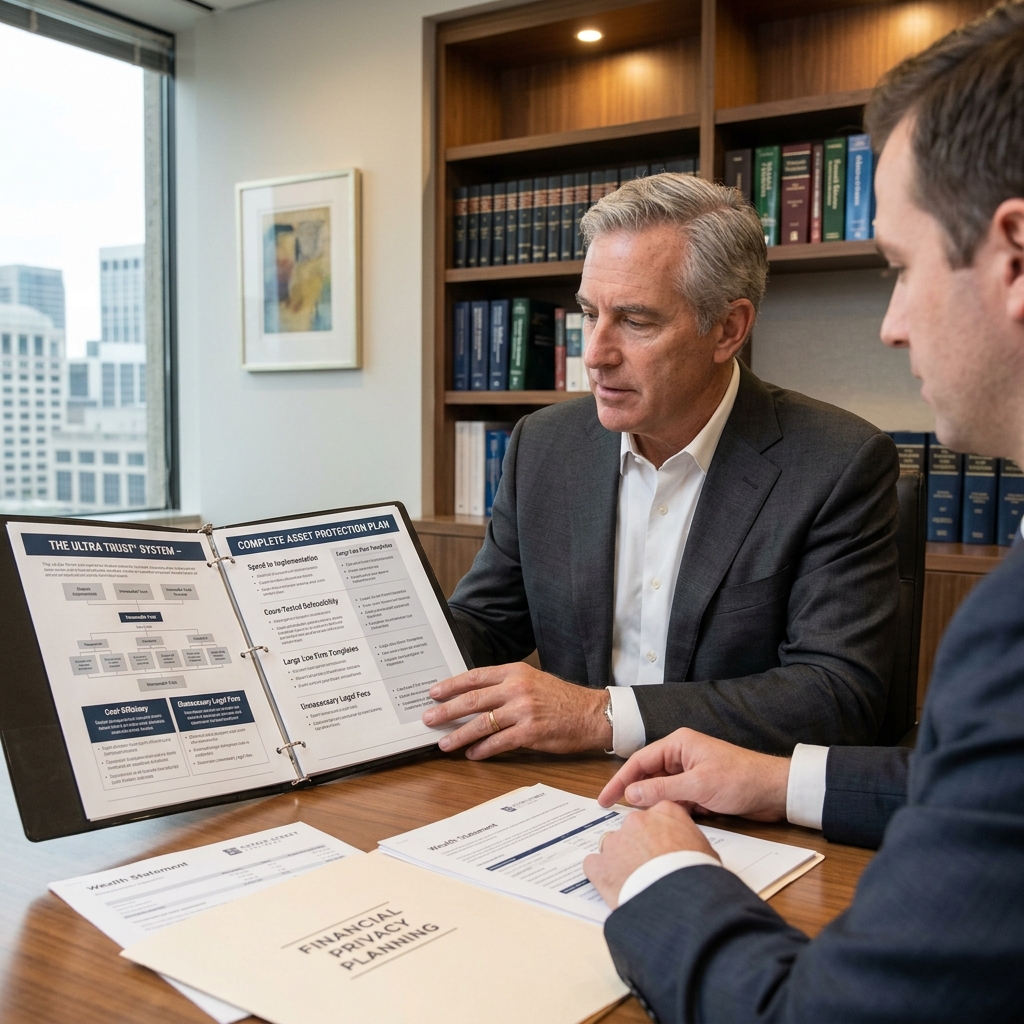
The Ultra Trust system builds financial privacy into the initial design through independent trustee arrangements that eliminate public law firm associations, funding structures that minimize public record exposure, and distribution patterns that reduce what becomes discoverable in litigation. Standard estate planning provides accidental privacy—the trust avoids probate, so records aren’t public, but the private trust documents themselves are discoverable in any litigation. Our approach adds deliberate opacity that makes it expensive and time-consuming for creditors to even identify assets potentially subject to recovery. We also integrate state law advantages that allow privacy-optimized trustee structures in specific jurisdictions, maximize privacy around distributions, and maintain perfect tax reporting compliance without sacrificing privacy protection. The result is that creditors often cannot determine whether they’ve successfully identified all your assets even after expensive discovery; the cost and uncertainty makes marginal recovery attempts economically irrational for them.
—
Expert Guidance Throughout Your Journey: Ongoing Support That Matters
Creating the Ultra Trust structure is a beginning, not an endpoint. Wealth protection requires ongoing alignment between your actual circumstances and your protective structures. Asset compositions change, liability exposures evolve, tax law shifts, family situations develop complexity.
Large law firms provide post-execution support at hourly rates. A trust review costs $2,000-$4,000. A modification costs $5,000-$10,000. A consultation about whether your current structures address a new liability exposure costs another $1,500-$3,000. Over a decade, these incremental charges accumulate to tens of thousands of dollars.
Our approach integrates ongoing guidance into the relationship. We maintain regular contact with Ultra Trust clients. We monitor tax law changes and inform you when modifications would improve your situation. When your circumstances change—a major acquisition, new liability exposure, family transition—we evaluate the impact on your structures and adjust as needed.
This matters practically. Suppose you acquire a company with significant environmental liability. A large law firm would wait for you to ask whether this affects your existing trust structures, then charge you to review and potentially modify them. We proactively contact you, explain the exposure, and determine whether structural adjustments are warranted. Suppose tax law changes create a planning opportunity that your current structures don’t fully capture. We identify the opportunity and discuss whether modifications align with your goals.
We also provide guidance on trustee interaction. Many high-net-worth individuals establish trusts but then struggle to communicate effectively with trustees about distributions, accounting, and asset management. We facilitate that communication, ensuring the trustee relationship actually functions as designed.
This ongoing support prevents a common pattern: high-net-worth individuals establish protection structures and then years later discover that changed circumstances have rendered them partially ineffective. By maintaining active engagement, we ensure your structures remain aligned with your actual situation.
What ongoing support does Estate Street Partners provide after Ultra Trust implementation?
Estate Street Partners includes ongoing guidance in the client relationship at no additional hourly charges. We maintain regular contact, monitor tax law changes and inform clients when modifications would improve their situation, provide guidance on trustee communication and distribution strategy, and adjust structures proactively when circumstances change—business acquisitions, liability exposures, family transitions. This is fundamentally different from the “set it and forget it” model large firms operate under, where every communication costs additional hourly fees. We treat ongoing optimization as part of the core relationship, not as billable events to be minimized. Additionally, we stay current on state law changes that might affect your structures—when a state legislature modifies spendthrift law or creditor protection statutes, we evaluate whether your existing trusts capture the new advantages. We also track court decisions that affect asset protection strategy and alert clients when favorable precedent emerges or when unfavorable rulings suggest preventive modifications.
How does ongoing guidance differ from the “implementation and done” approach most law firms use?
Most large law firms design a trust structure, execute it, and then consider their work complete unless you specifically request changes. This creates perverse incentives: the firm doesn’t profit from your structures remaining optimally aligned with changing circumstances. In fact, they benefit if you contact them with problems, which generates additional billable work. Our model directly rewards keeping your structures optimally protective and tax-efficient. We proactively contact clients about law changes, new creditor-defense strategies, and modifications that improve your situation. This means you benefit from new legal developments without discovering them accidentally years later. Additionally, ongoing guidance ensures your trustee relationship actually functions effectively—many structures fail not because they’re poorly drafted but because the trustee and beneficiary don’t communicate effectively. We bridge that gap, ensuring trustees understand your intentions and beneficiaries understand what distributions are realistically available. Over a decade, this ongoing guidance typically adds $50,000-$150,000 in value to your structures by capturing planning opportunities, preventing unforced errors, and ensuring trustee relationships remain productive.
—
Why Estate Street Partners Is Your Clear Choice for Legacy Protection
The choice between Estate Street Partners and large law firms comes down to alignment of incentives and specialized expertise. Large law firms are generalist institutions that treat asset protection as one service among dozens, optimized around billable hours rather than client protection. We’re specialists entirely focused on one outcome: ensuring high-net-worth individuals actually remain protected.
This difference manifests across every dimension of the relationship. You’ll pay 40-60% less because we don’t maintain overhead across unrelated practice areas. You’ll get protected faster because we’ve eliminated the administrative steps that create delays at large firms. You’ll receive structures tested by actual court outcomes, not theoretical legal logic. You’ll maintain better financial privacy because our structures are designed around independent trustees and visibility friction, not firm-affiliated institutions. You’ll receive ongoing guidance that evolves with your circumstances rather than hourly consultations that treat every change as a billable event.
The Ultra Trust system exists because we believe asset protection is too important to be treated as a secondary service. The court-tested language in our structures reflects years of defending high-net-worth clients in actual litigation. The flat-fee pricing reflects our confidence in the methodology—we’re not building complexity to justify billable hours. The ongoing guidance reflects our commitment to keeping your structures aligned with your actual situation, not just the situation they were designed to address five years ago.
When you’re considering where to place your wealth protection, consider not just the initial plan but the entire experience: the cost, the speed, the expertise, the ongoing relationship. Consider whether the institution you’re working with profits when you remain protected or profits when your protection becomes inadequate. Consider whether they’ve actually defended the structures they designed or whether they’re relying on theoretical arguments.
For high-net-worth individuals who want genuine protection—not just documents, not just a tax strategy, but actual shields that survive when tested—Estate Street Partners and the Ultra Trust system are your clear choice. We’ve built this practice entirely around one purpose: ensuring your legacy remains protected and your assets remain private. That focus, combined with our court-tested methodology, specialized expertise, and client-first economic model, delivers protection that large law firms simply cannot match.
Contact us to discuss how the Ultra Trust system specifically addresses your liability exposure and wealth protection goals. The initial consultation identifies your unique circumstances and shows you exactly how our approach differs from what a general practice firm would recommend.
For further reading: Irrevocable trust planning, California asset protection.
Contact us today for a free consultation!