

Property planning refers not just to transfer assets. This requires some careful thought as to who the recipients will be and how distributions will happen. A Beneficiary of a Trust is the person or the entity to whom the assets in a trust are given. It is important for the creators and the receiver of trust.
Trust structures are formed for safeguarding assets and managing distributions over the long run. The benefactor is the most relevant part of this. The rights and expectation that a trustee can claim depends on the trust type and governing law.
Beneficiaries can get distributions of income, principal, or contingent. The trust relationship provides beneficiaries with an enforceable legal right against the trustee. The role of beneficiary, comparison between trusts, and practical issues to consider for trust planning.
What is the Role of a Beneficiary of Trust?
Whoever is named in the trust document to benefit from the trust is the beneficiary of the irrevocable trust.
Income, property or financial assets could be the benefits. The trustee carries out distributions based on the trust.
A beneficiary does not control the trust unless otherwise stated. Trustees hold the fiduciary duty. This creates a professional management of assets.
| Beneficiary Type | Description | Distribution Style |
| Income Beneficiary | Receives regular income from trust assets | Periodic payments |
| Remainder Beneficiary | Receives assets after income term ends | Lump-sum or residual share |
| Contingent Beneficiary | Receives assets if conditions are met | Conditional distribution |
| Charitable Beneficiary | Organization designated for benefit | Structured allocation |
Each category has different rights and expectations. People receiving income may rely on steady payments After a certain time, remainder beneficiaries get the assets.
Beneficiaries’ rights are stated and defined in trust documents. Crystal clear drafting avoids misinterpretations.
Trust Beneficiaries’ Legal Safeguards and Rights
Beneficiaries possess legally binding rights under trusts. Trustees must act in their own interests:

Entitlement to Information
Beneficiaries usually have the ability to obtain periodic accountings. Clarity guarantees fiduciary adherence.
Trustees are to provide true and fair financials. Not complying may invoke consequence of take legal action.
Entitled To Just Administration
The assets must be managed prudently by the trustees. They’re not allowed to favor one beneficiary over the other.
Being impartial is important when there are different beneficiaries. Disputes minimized with balance management.
Rights of key Beneficiary of a Trust include
- Access to trust documents.
- Clearly Shows Accounts.
- Just and unbiased treatment.
- Litigation for breach of fiduciary duty.
Add more confidence and something positive.
Expectations for Distribution
Some trusts give trustees discretionary authority. The trustee’s judgment determines distributions in such cases. Others provide a must distribution schedule. Clear terms eliminate ambiguity. It should be clear to the beneficiaries whether or not the distributions are guaranteed, or conditional.
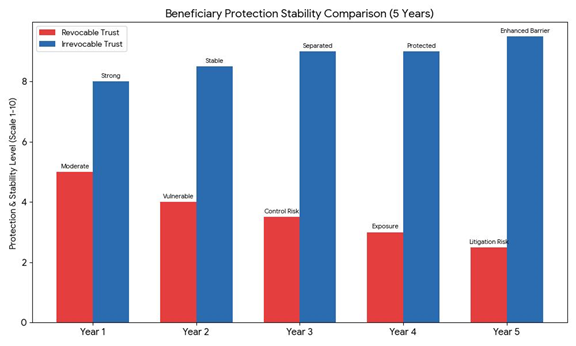
- Irrevocable trusts offer a Strong to Enhanced Barrier level of protection in all cases. This effectively protects the assets from creditors and other lawsuit claims.
- The Control vs Security trade-off: Revocable trusts offer flexibility, however, the grantor’s ability to change the trust protection Control Risk. This gradually increases the likelihood that courts will treat the assets as personal property during litigation.
- An irrevocable trust will clearly separate you, the grantor, from the trust assets. This stability ensures the beneficiary’s interests remain secure regardless of the grantor’s future financial or legal situation.
Things to keep in mind when naming a Beneficiary of a Trust
Beneficiary choice enhances estate planning effectiveness.
Trust Drafting Made Clear
Vagueness can lead to conflicts. Conditions and percentages of all distributions.
Make provisions for unforeseeable variability. Substitute beneficiaries assure consistency.
Keep Tax Impact in Mind
Distributions may have income tax consequences. Beneficiaries who know tax treatment can plan wisely.
Tax and legal pros lower chances of non-compliance.
Think about these planning steps
- Determine main and secondary beneficiaries.
- Explain the conditions of distribution.
- Evaluate tax consequences minutely.
- Adjust the terms of a trust periodically.
Communication and Openness
When you talk, you see eye to eye. The beneficiaries must be aware of the trust objective.
During their lifetime, trust creators may choose to disclose key information. This helps bring clarity and avoids potential disputes in the future.
Planning ahead results in peace and prosperity – Beneficiary of a Trust
Trust beneficiaries play an important role in the estate planning context. The design of the system and legal compliance shape their rights and expectations.
Careful drafting, effective trusteeship, and the appropriate choice of trust structure enhance the security of the beneficiary. Revocable and irrevocable trusts are not the same, and understanding these differences is important when planning asset protection strategies with solutions such as UltraTrust.
Awareness of beneficiary rights makes life easy. Planning strategically today preserves wealth for generations. Families can build stability and clarity into the future by aligning their trust structure with needs.
Estate planning can safeguard your assets and your relationships while giving you financial security.