
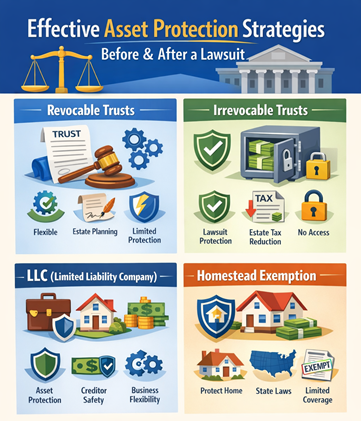
A lawsuit can be one of the most stressful situations for any person or business owner. By understanding how to keep your wealth safe from court judgment, you may limit the impact on your assets before or after the fact. Protecting your assets from lawsuits is just not about safeguarding property. Asset protection also covers protecting your investments, savings, and possible future earnings from creditors. In this article, we will talk about the basics of asset protection from lawsuit, effective techniques and how you can protect your assets even after someone has already sued you.
Understanding Asset Protection from Lawsuit
Asset protection from lawsuits is using the law to keep your assets safe from being seized or used to satisfy a judgment in a lawsuit. This may involve protecting personal assets, business assets, and any wealth that is vulnerable to the court system in the event of a lawsuit.
Why Asset Protection Matters
When someone brings a lawsuit against you, the court can give a judgement against you for damages and this creates a risk for your own assets (savings, property, and investments). It is essential to have a strategy in place for protecting your assets from occurring. Without the right protection, you or your business could lose important goods in a legal fight, affecting your finances.
Common Asset Protection Strategies
| Strategy | Description | Effectiveness |
| Revocable Trusts | Allows you to maintain control over assets, but not the best for protection. | Low to Moderate |
| Irrevocable Trusts | Transfers control of assets to a trustee, providing strong protection. | High |
| Limited Liability Company (LLC) | Protects personal assets from business-related risks. | Moderate to High |
| Homestead Exemption | Protects the primary residence from creditors in some states. | Moderate |
Effective Asset Protection Strategies Before and After a Lawsuit
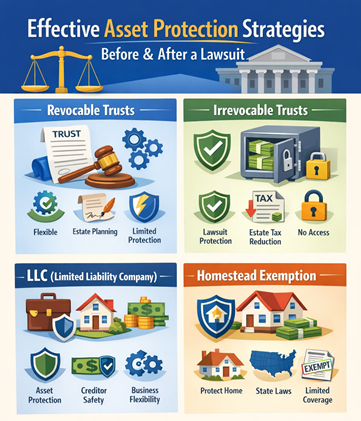
How effective an asset protection strategy depends on whether you have already been sued or you are planning for the future. Here are some of the most commonly used strategies for asset protection.
Revocable Trusts
A revocable trust permits the transfer of assets into the trust without losing control of the assets. You always have the option of changing or removing the trust. But as you remain in control of the asset, the asset remains vulnerable to creditors and law suits. Even though revocable trusts have privacy and estate planning benefits, they do not significantly protect against legal claims.
Benefits of Revocable Trusts:
- You control the assets, which provides flexibility.
- Estate Planning Helps Prevent Probate On Death
- Asset protection is limited – assets are not protected from lawsuit
Irrevocable Trusts
An irrevocable trust provides more robust lawsuit protection because once assets are placed in the trust, they are no longer part of your estate. Without consent of the beneficiaries, you can’t change or liquidate the trust. Therefore, any asset held in an irrevocable trust is safe from creditors. High-Net-Worth clients often use this strategy when protecting their wealth.
Irrevocable Trusts Advantage.
- Assets are protected from lawsuits and creditors.
- This benefit helps in reducing the estate tax by removing assets from the estate.
- You will not have access to any of these assets again once they are placed in the trust.
Limited Liability Company (LLC)
Business owners often take the route of forming an LLC Advantage to protect their personal assets from business liabilities. If the business gets sued, the LLC prevents personal wealth from being lost along with the business’ assets. In case of any lawsuits against your business or case being filed against them, only the assets of the LLC will be at stake and not yours personally.
Benefits of LLCs:
- Separation of Assets: Protects personal assets from business-related risks.
- Creditor Protection: Personal creditors cannot access LLC assets.
- Flexibility: LLCs provide options for taxation and management.
Homestead Exemption
Homeowners can protect their principal residence from a certain class of creditors by the homestead exemption. In Pennsylvania and other states, the value of a portion of your home’s equity can not be used to satisfy a judgment. Yet, that right is also limited and does not apply to all creditors.
Homestead Exemption Benefits
- Safeguard some of your home’s value from creditors.
- Opioid laws vary dramatically by state. It’s important to know the law where you practice.
- Not all types of debts will receive protection from this scheme.
What to Do After a Lawsuit Is Filed
If a lawsuit is already pending against you, protecting your assets may be more difficult. Nonetheless, there are still some ways to lessen the impact of a judgment and protect your assets.
Asset Protection Before and After a Lawsuit
- The Power of Proactive Planning: Asset protection is effective if you wait until after a cloud of labels and legal issues. The Uniform Voidable Transactions Act (UVTA) is the legal standard for lawsuits, which allows creditors to unwind the transfer.
- Asset protection trusts are most advantageous when they are offshore, as they provide the greatest protection against U.S. judgment collection above the jurisdiction of U.S. courts. However, even these lose substantial effectiveness once a filing occurs, as the judge can find a debtor in contempt for refusing to repatriate.
- Some assets are protected by laws like ERISA-qualified retirement accounts and Homestead exemptions. Their effectiveness tends to remain stable, whether a lawsuit is filed in the past or in the future, although limits vary from state to state.
Asset Transfers Before a Lawsuit
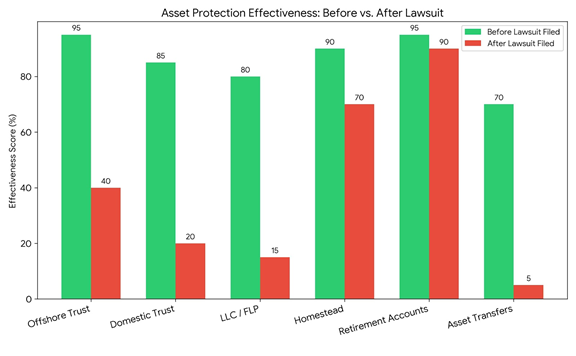
If you believe someone may file a lawsuit against you, one of the most effective strategies is to move your assets into an asset-protection structure, such as an irrevocable trust or an LLC. You should arrange this in advance to prevent creditors from seizing those assets. If you transfer assets after a lawsuit is filed, the court will likely treat the transfer as a fraudulent conveyance.
Exempt Assets
Many Ultra Trust assets cannot be seized in states like Pennsylvania. Retirement accounts, life insurance policies, and occasionally personal property exemptions can be applicable based on state law. Once a lawsuit is filed, knowing which assets are exempt can ensure that you do not lose wealth.
Practical Steps to Protect Your Assets from Lawsuits
Having the ability to protect your assets is essential whether you are planning ahead strategically or fighting a lawsuit.
- It involves various legal strategies: You will need an asset protection attorney to assist you. An asset protection attorney can set up a specialized plan to suit your particular situation.
- Understanding: Which of your assets are vulnerable and which are out of reach for creditors. This will help you decide which strategies to use.
- Move Your Assets Early: If you are anticipating a lawsuit, get your assets into a protected structure such as an irrevocable trust or an LLC, prior to a lawsuit being filed against you.
- Think About Protection: Liability insurance is an invaluable weapon against lawsuits. Make sure you have coverage for potential risk
- Make sure your plan becomes updated: As your financial situation changes over time. Make sure to consistently review and adapt your approach to avoid dangers.
Conclusion
Lawsuit protection of assets is important to secure your wealth and ensure financial security for life. Whether you are taking steps to protect assets or responding to a lawsuit, the right asset protection strategies can help minimize claims against your assets. There are ways that you can protect your personal and business assets from creditors through use of irrevocable trusts, LLCs, the homestead exemption and more.
Collaborate with a knowledgeable attorney to establish a competent asset protection plan that genuinely safeguards your wealth no matter what happens or under any circumstances.
Frequently Asked Questions:
Q.1. Can I protect my assets from a lawsuit after it’s been filed?
When a lawsuit is filed it can be difficult to protect your assets. There are still things you can do to lessen the blow. You can shield a portion of your property through exemptions and proper planning of moves. It’s important to take action sooner rather than later and consult an experienced lawyer about what options are available to you.
Q.2. How does an irrevocable trust help protect my assets?
A trust that you can’t change hands over your assets to a trustee, which means your assets are not available to creditors in case of fault. Assets placed in the trust are usually not liable for lawsuits.
Q.3. What assets are typically exempt from lawsuits?
In many states, the law protects certain assets—such as retirement accounts, life insurance policies, and personal property up to a specified limit—from creditors, so creditors cannot seize them in a lawsuit.
Q.4. Can I transfer my assets to an LLC to protect them?
Absolutely. Setting up an LLC for the assets of your business is a common way to separate your personal wealth from your business liabilities and to protect your personal assets if sued.
Q.5. When should I start asset protection planning?
The earlier you start asset protection planning the better or long before any events trigger it. You can still take specific actions after someone files a lawsuit.
Vary Sentence Structure and Word Choice Naturally Tags: asset protection lawsuit protection asset protection strategies irrevocable trusts llcs wealth protection


