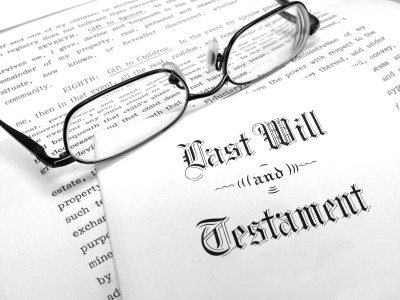
Without a will and a trust Anna Nicole Smith leaves behind many unsettled legal issues including paternal rights to her baby daughter.
Watch the video on Anna Nicole Smith Dies Without a Will. What’s a Will? What’s a Trust?
Like this video? Subscribe to our channel.
Subsequent to the death of Anna Nicole Smith, it’s been reported that she may not have left a will, giving rise to additional turbulent legal confusion for years to come. Without a will, Anna Nicole potentially may be leaving her baby daughter with nothing. Amongst other celebrities dying without a will, include Abraham Lincoln, Howard Hughes, Martin Luther King, Buddy Holly, Marvin Gaye, Sonny Bono, Tiny Tim, and others.
If Anna Nicole died without a will she also died leaving behind many unsettled legal issues, the paternity issue and final custody of her daughter, the unsettled case against her late husband’s estate J. Howard Marshall II (oil tycoon), and finally the country/state of court jurisdiction, Bahamas, Florida, Texas, or California.
What’s a Will? Why was a Will important for Anna Nicole Smith?
Per Consumer Reports magazine, more than 2/3 of Americans die without a will. So what’s a Will? Why is it important? And, how do you get one?
A will is your last written list of wishes effective after your death for the purpose of distributing your wealth and the conditions of which such distribution can occur. The most important part of the will is the designation of custody of minor children; (this issue alone, – the custody of Anna Nicole’s daughter would have greatly simplified at least one important piece of the legal quagmire left behind for lawyers to have a field day and possibly eat/consume a good part of her estate).
Without a will, the courts will have to determine who gets what! And, if you have property in multiple states, each state will determine the results separately through a process knows as probate.
The probate process is when the state courts will inventory the deceased person’s assets (the willed assets must be titled in the maker’s name and belong solely to the maker, or have an interest); it will gather information about claims made against the estate, investigate all claims for their validity, pay off outstanding debts, make decisions as to who gets what based on state laws where the property is located.
What happens to assets with Co-Ownerships & Joint Tenants?
Property that’s titled in “co-ownership or as joint tenants with right of survivorship” such as husband and wife, automatically goes to the co-owner’s or spouse. Similarly property that’s titled as “tenants by the entirety” immediately becomes the property of the other tenant. Property that’s owned with someone else as “tenants in common” becomes a probate asset and is distributed according to the terms of the will.
Who may create a Will?
Any person over the age of 18 may draft his own will with or without an attorney. The creator of the will is required to clearly identify himself/herself as the maker of the will, must revoke all prior wills, must state that he/she is of sound mind, must identify each item of property or personal effects, and must clearly identify each person to receive such property. If there are minor children the creator must clearly identify the person or persons to take custody of the minor children, and the creator must identify who will become the executor of his/her will after the creator’s death.
The will must be signed in front of a notary public, or in front of two “disinterested parties over the age of 18” (not family members). It’s best that the will be notarized, signed in front of a notary public which the notary will append their notary stamp on the original signature.
The most common mistake is that a will is signed by family members, another common mistake is to disinherit a family member or close friend. It’s best to mention the individual by name and to give them a small amount rather than to intentionally leave them out of the will.
The excluded member may sue the estate, and therefore cause unpleasant and unwanted delays.
What happens after th Will Creator Dies?
After the date of death of the maker of the will, everything in his/her name will have to go to probate. No matter how well drafted, the will becomes the jurisdiction of the local state probate court where it becomes a “public document” whereby the will becomes available to all interested parties and creditors.
A will does not avoid the probate process. The court will determine the validity of the will instrument for such reasons as undue influence, or incapacity of the creator at the time the will was drafted, appoint an executor if one is not named, and the court will determine who is eligible to receive the property according to the state’s intestacy laws in order of blood kinship to the creator of the will.
As mentioned before, no matter how well drafted, a will must go to probate where it becomes a public document for every interested party to view and review. The only method of avoiding the probate process is to have your possessions and valuable assets titled to a Trust.
- All Trusts, revocable or irrevocable, grantor or non grantor -avoid Probate.
- A will does NOT avoid Probate.
- A will does NOT avoid Estate Taxes.
- Only an “Irrevocable Trust” avoids Estate Taxes.
One the Date of Death, Two things happne:
- All assets in the decedent’s name, belonging solely to the decedent, or where the decedent had an interest, go to probate to determine who gets what. This is the Probate Process.
- Once all assets are probated, all assets in the name of the decedent is appraised for it’s “fair cash value” on the date of death, not when the assets were purchased, to determine if there’s an estate tax up to 55%. The estate must pay the tax. The person receiving the asset receives the asset tax-free.
What’s an Estate Tax?
Generally the estate tax is an advalorem (value) tax based on the “fair cash value” of the assets titled in the decedent’s name or where the decedent had an interest. Property of whatever kind or character, whether real estate, personal property, or bank accounts, cash or near cash investments, interest either as a joint tenant with right to survivorship or a tenant by the entirety is subject to the estate tax.
There are exclusions, such as unlimited spousal deduction that which you leave to the spouse and some other exemptions reportable on form 706 United States (and Generation−Skipping Transfer) Tax Return. The form is extremely complex and is beyond the scope of this article. Please consult with a qualified professional.
To learn more about how you can prevent Anna Nicole Smith situation, safeguard your assets, and discuss your situation about wills, estate taxes, probate, irrevocable trusts and implement a solid asset protection system call Estate Street Partners 888-93-ULTRA (888-938-5872).
Helpful resources: Readers often continue with Asset Protection for Business Owners, LLC vs Trust for Asset Protection, and official SBA guidance while sorting through timing, control, and long-term protection choices.
What often changes the answer
After reviewing Anna Nicole Smith Dies Without a Will. What’s a Will? What’s a Trust?, many people want a clearer sense of how the answer changes once real life timing, funding, and control are added to the discussion.
What usually shapes the next step
- Probate, taxes, and creditor exposure do not always point to the same structure, so priorities matter.
- Timing matters because estate planning gets stronger when decisions are made before pressure builds.
- Funding matters because wills, trusts, titles, and beneficiary designations need to work together.
Where readers often continue
A practical next reading path is Revocable vs Irrevocable Trust, Irrevocable Trust, and Trust Setup Cost. When government rules shape the decision, many readers also review official IRS estate and gift tax guidance.