
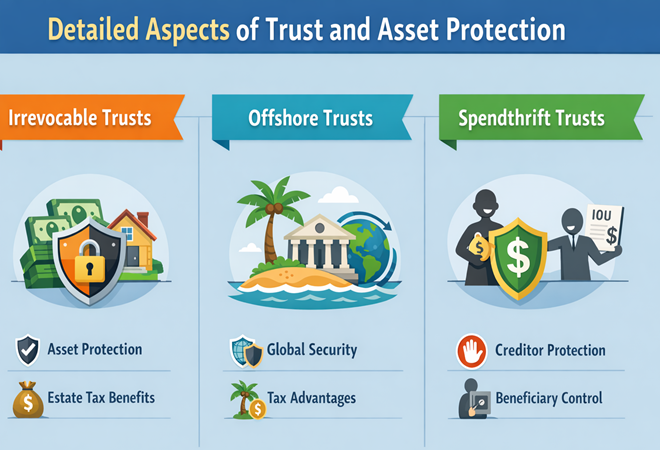
As the world becomes more unpredictable, safeguarding your wealth and assets. Trust And Asset Protection are imperative to keeping your assets safe from lawsuits, creditors and other risks someone may face in life and business. Trusts can be an effective way to protect wealth. However, they must be set up correctly and in a strategic manner. In this post, we’ll explore the basics of trusts and asset protection, why they are essential, and the different ways to secure your assets for the future. If you are a business owner, a high-net-worth individual or someone worried about asset security, understanding these tools will help you achieve peace of mind.
Understanding Trust and Asset Protection
An area of law that protects assets from third-party claims, like creditors, through the use of a trust. The main objective is to make sure that your wealth isn’t threatened without restricting your use and spending.
What is Trust Protection?
Trust protection requires asserting your ownership of assets by creating legal structures, such as an irrevocable trust or a spendthrift trust, to protect your wealth preservation. After the transfer of the assets, they are held in trust by a trustee on behalf of your beneficiaries offering varying levels of protection. You can protect your personal assets by creating a trust. This will prevent creditors or other people from claiming your assets.
Why Asset Protection Matters
Protecting your assets is essential as they are crucial to your life and a guarantee of your future wealth. Without protection from courts, divorce, business creditors, smart people can lose assets to lawsuits. To prevent risks, it is essential to implement asset protection.
Types of Trust and Asset Protection Methods
| Method | Description | Protection Level |
| Revocable Trust | Flexible; assets can be altered or revoked | Low |
| Irrevocable Trust | Cannot be modified; provides strong protection | High |
| Offshore Trust | Placing assets in foreign jurisdictions for privacy | Very High |
| Spendthrift Trust | Protects assets from beneficiaries’ creditors | Moderate to High |
Detailed Aspects of Trust and Asset Protection
The methods and strategies relating to trusts and asset protection permits a variety of legal protection of your assets. Here’s a thorough examination of a few of the best techniques.
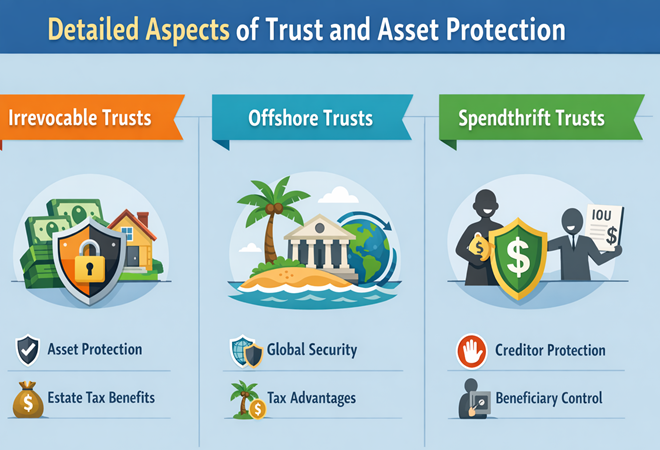
Irrevocable Trusts: High-Level Protection
An irrevocable trust is one that cannot be changed or revoked after it has been set up. Consequently, by putting wealth into the trust, the assets that are in the trust are no longer yours and protected from creditors. High‑net‑worth people commonly use irrevocable trusts to protect their wealth from any claims against it.
Benefits of Irrevocable Trusts:
- Once assets go into the trust, they are usually protected from creditors, strong protection.
- Estate Tax Advantages: Since you no longer own the assets, your estate will no longer be subject to those taxes.
Offshore Trusts: A Global Approach
Foreign countries provide stronger protection laws that are more favorable to asset holders like offshore trusts. Offshore asset protection trusts can provide effective protection from domestic creditor claims because many offshore jurisdictions have strong legal privacy protections that creditor lawyers find extremely difficult to penetrate.
Benefits of Offshore Trusts:
- Assets are protected from creditors both in Canada and abroad.
- Certain offshore jurisdictions contain interesting tax laws that can assist in lowering tax burdens.
Spendthrift Trusts: Protecting Beneficiaries’ Wealth
A spendthrift trust protects beneficiaries from creditors and is ideal for those who may not manage money very well. It keeps the trust fund assets safe and provides security to the beneficiary in the future.
Benefits of Spendthrift Trusts:
- It prevents beneficiaries from wasting and mismanaging their inheritance.
- Beneficiaries’ creditors cannot reach the assets of the trust.
Comparing Trust and Asset Protection Strategies
To help you understand the differences between various trust and asset protection strategies, let’s look at a comparison of some of the top methods.
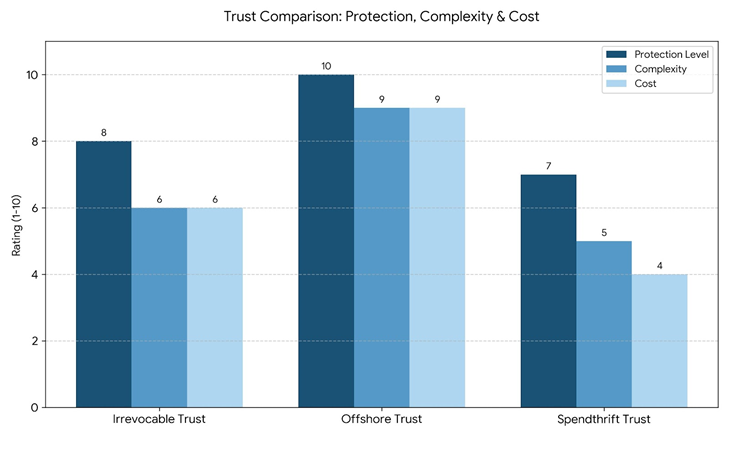
- Offshore trusts offer the highest level of asset protection (10/10) by placing your assets in a foreign jurisdiction that your creditors can never reach.
- Irrevocable trusts can protect much of the domestic estate as they remove the ownership of the grantor which can be targeted by future judgments.
- Spendthrift trusts are great at keeping your inheritance safe from creditors and improper use as a beneficiary. They provide a lot of value for a low complexity.
Irrevocable Trust vs. Revocable Trust
An irrevocable trust provides better protection than a revocable trust because the assets you put into an irrevocable trust no longer belong to you. In contrast, a revocable trust allows you to access your assets if you need to, but it is less protected from creditors and lawsuits.
Offshore Trust vs. Domestic Trusts
Because foreign entities manage offshore trusts, they benefit from foreign laws that are usually debt‑friendly. Solutions are fairly easy to implement and administer as compared to an offshore trust. However, they do not provide as much protection as an offshore trust.
Practical Tips for Implementing Trust and Asset Protection
It is essential to take a strategic approach whilst considering trust and asset protection. Here are a few real-life tips for you to secure your wealth.
- Eliminate your estate taxes of an experienced attorney is important. If you do not set up your trust correctly and properly, you may suffer the very consequences the trust is intended to avoid.
- Consider the Kind of Protection You’ll Need: All it takes is the right combination of trusts to achieve the high-level protection you need depending on your financial situation and purpose. For instance, using an irrevocable one, coupled with a spendthrift one for the beneficiaries.
- You should frequently review your asset protection plan because your strategies need updating as your assets grow or your financial situation changes.
- It doesn’t matter if you are using an offshore or domestic trust, you have to be compliant with the laws of the applicable jurisdiction so that you do not get into any trouble.
Final thuoghts
Any comprehensive estate plan should include Ultra trust and asset protection for you. Wealthy individuals and families have protected their riches with the help of various trusts for centuries. Use of irrevocable trusts, offshore trusts, and spendthrift trusts to protect your assets from creditors, lawsuits, and more. But, the important part is to hire an attorney that will help you pick the right plans that suit your needs. The best time to put an asset protection plan in place is now to keep your wealth intact.